

Most die young
For most startups, death is not a question of if, but when.
It’s not surprising to learn that over half of them die before they raise $1 million, and 70 percent die before raising $5 million. Most dead companies raised $11.3 million on average, with a median of $1.3 million.
There is one feature that venture capitalists get extremely excited – velocity. Escaping the gravitational pull towards plateau or worse its own death.
Escape velocity to escape earth’s gravity is 11.2 km/sec. For a start up finding product-market fit and scaling at such speed that it ideally exits via IPO or acquisition are important.
To move and reach escape velocity is a extremely hard task. That is why VCs get extremely excited to see momentum and speed of start up. Making a startup successful is really tough. We often see the big wins, which is actually survivorship bias, in reality, most startups don’t make a lot of money back for their investors.
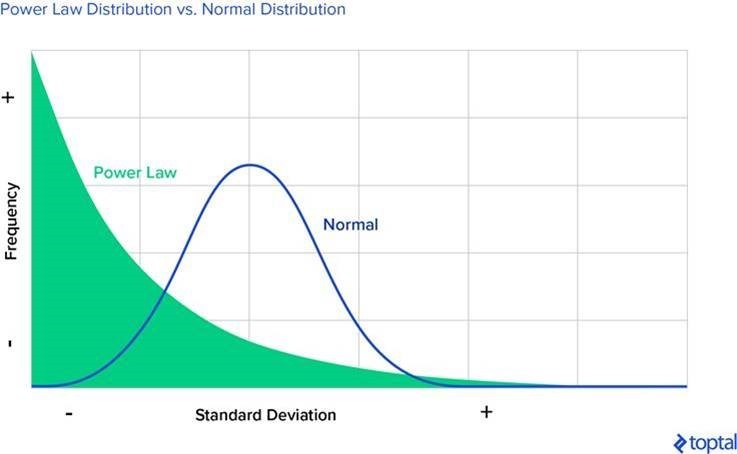
A study by Correlation Ventures shows that 65% don’t even return the money that was invested. Going public, like with an IPO in the US, hardly ever happens. In 2019, for example, over 6,000 US companies got venture funds, but only 23 of them went public. When it comes to venture investing, it’s not about everyone winning a little; it’s more like a few winning a lot.
Power law is abnormally normal in venture world.
So how to increase the odds?
Two ways – Market Fit and Momentum
According to Steve Blank, the author of The Four Steps to the Epiphany: Successful Strategies for Products that Win “The number one problem I’ve seen for startups, is they don’t actually have product/market fit, when they think they do.” He further adds “Startups need 2-3 times longer to validate their market than most founders expect.
This underestimation creates the pressure to scale prematurely… In our dataset we found that 70% of startups scaled prematurely along some dimension. While this number seemed high, this may go a long way towards explaining the 90% failure rate of startups.” So market fit is one of the first steps to achieve preferably before scaling as they say “Nail it before you Scale it“.
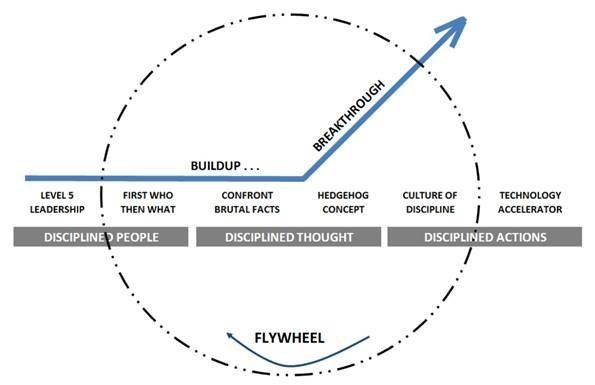
Source: Jim Collins, Turning the Flywheel
The inertia towards the momentum can be achieved by creating and aligning carefully designed strategy and disciplined execution that aligns key aspects of the business just like turning the flywheel or pedaling a bike.
By studying how Amazon and Airbnb achieved profitability post IPO one can make sure they are in the winners and achieve the velocity. The first steps are really hard – getting that first customer and first deal and rolling on and getting the momentum. A start up is done if the founders give up mentally very early, having the mindset, focus, execution and drive is important to be resilient during the initial phase and move on and experience burn to escape the gravity to end in the fail tail graveyard of the Power Law graph.