

When you conceal your will from others, that is Thick.
When you impose your will on others, that is Black.
—LEE ZHONG WU
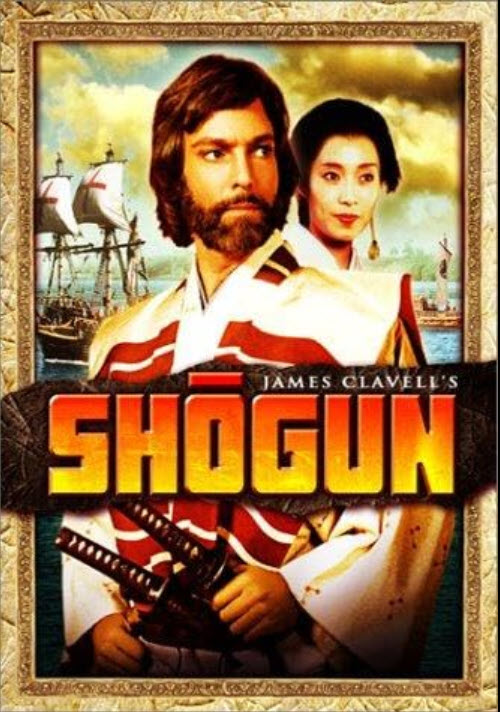
Shogun Series (1980)
Although I don’t typically watch TV shows, as a history enthusiast, I was drawn to the “Shogun” series, which concluded last week. Based on James Clavell’s novel, it fictionalizes the rise of the Tokugawa Shogunate during Japan’s “Warring States” period from approximately 1467 to 1615. This era was characterized by relentless military conflict and political instability as various feudal lords, or “daimyo,” competed for dominance.
Spoiler Alert: In the series, the protagonist, modeled after the historical figure Tokugawa Ieyasu, is named Lord Toranaga. Known for his cunning and strategic prowess, Toranaga often appears to be at a disadvantage, yet he skillfully manipulates events to his favor. Initially, he finds himself out of favor with the ambitious regent, Lord Ishido, who commands vast resources—including a formidable military, significant wealth, and numerous allies, backed by the influential Queen—posing a significant threat to Toranaga’s ambitions.
As the story unfolds, viewers are led to believe that Toranaga will surrender, especially after his right-hand lieutenant commits seppuku under the misconception of an impending surrender. Viewers expect to see a fierce battle reminiscent of the “Battle of the Bastards” from Game of Thrones, instead the climax is marked by betrayal by an ally, the poignant poetry and dying words of a woman close to Toranaga who served as his translator. Just when the end seems near and potentially lackluster, Toranaga unveils his master strategy to the betrayer who is then executed. It is then that the audience realizes the master had been playing chess while everyone else was merely playing checkers – he mislead his allies and foes feigning surrender (Thick Face) , and ruthlessly executed his plans (Black Heart) by sacrificing his key allies and obtaining victory without traditional battle. Most strikingly, his arch-nemesis, Ishido, doesn’t even realize he lost the battle. Indeed, the quietest victories are often the sweetest.
In realms such as sports, politics, and business, one often encounters skilled strategists who, despite appearing as underdogs, masterfully orchestrate their paths to victory, my first example from sports is The greatest sportsman in the history – Muhammad Ali’s fight with George Foreman titled “Rumble in the Jungle” in Congo.
Heading into the “Rumble in the Jungle” in October 1974, George Foreman, aged 25, boasted an imposing undefeated record of 40-0, with 37 of those wins coming by knockout—a staggering 92.5% knockout rate that solidified his reputation as nearly invincible. His dominance was on full display when he decisively defeated Joe Frazier in January 1973, knocking him down six times in just two rounds to claim the heavyweight title. Foreman further cemented his fearsome status with knockouts of Jose Roman in his first title defense in September 1973, and Ken Norton in March 1974, dispatching Norton in just two rounds.
In sharp contrast, Muhammad Ali, at 32, faced a tougher path to reclaim his former glory. His victories over Joe Frazier and Ken Norton came through hard-fought battles, each extending to 12 grueling rounds decided on points. Returning from a boxing suspension, Ali’s ability to perform at an elite level was heavily scrutinized. As a former Olympic champion who had previously captivated the boxing world with his speed and skill, the prevailing sentiment among his team, the media, and experts was this was a suicide mission. Given Foreman’s crushing power and Ali’s recent challenging bouts, very few believed Ali stood a chance in the fight. This backdrop set the stage for one of the most anticipated showdowns in boxing history, with Ali entering the ring as the clear underdog.
As the “Rumble in the Jungle” approached, the atmosphere was thick with anticipation and a palpable tension that permeated through both camps. The stage was set in Kinshasa, Zaire, transforming the city into the epicenter of the global boxing community. Muhammad Ali, ever the master of psychological warfare, used every opportunity to get under George Foreman’s skin. His strategy extended beyond the physical preparation for the fight, delving deeply into psychological tactics aimed at unsettling the seemingly indomitable Foreman. Ali’s incessant taunting was a deliberate attempt to provoke Foreman, to incite a rage that might lead the younger champion to fight emotionally rather than strategically.
Foreman, known for his stoic demeanor and devastating power, was visibly irked by Ali’s antics. This psychological battle was playing out in full view of the world, adding an extra layer of drama to the already charged atmosphere. Ali’s tactics were not just about making Foreman angry; they were about forcing the powerhouse to abandon his game plan and engage on Ali’s terms—less cautious, more reckless. He kept saying “I am going to dance” referring to outmaneuver George. While Ali radiated confidence, his support team was at a loss, unsure not only of how he could possibly defeat George, but even of how he might withstand the onslaught.
Time my have come to say good bye to Muhammad Ali because very honestly I don’t think he can beat George Foreman . Maybe he can pull off a miracle, but against George Foreman?
So young, so strong, so fearless? Against George Foreman, who does away with his opponents one after another in less than three rounds? It’s hard for me to conjure with that. After this fight I suspect Ali will retire. And through all of the years my own memories of him will be as a fighter, and as the strange and curious and gregarious and engaging and sometimes cruel, and sometimes family man that he is.
–Howard Cossell, ABC Sports (before the fight)
The day arrived and the dressing room was like a morgue before the fight, nobody knew how Ali (Thick Face) was going to counter George’s powerful punches. As the bell rang for the start of the fight, the tension in the Kinshasa stadium was palpable.
- Round 1: Foreman, living up to his reputation, charged forward with a series of robust, powerful punches aimed at ending the fight early. Ali quickly adjusted his tactics, moving towards what would become one of the most iconic strategies in boxing history.
- Rounds 2 to 7: Foreman continued to aggressively attack, but Ali effectively used the ropes for his defensive “rope-a-dope” strategy, absorbing Foreman’s punches while conserving his own energy. Throughout these middle rounds, Ali’s approach seemed passive to the untrained eye, but it was a calculated act of endurance and psychological warfare. He continuously taunted Foreman, “Is that all you got, George?” This not only served to infuriate Foreman but also to make him expend more energy with each swing. While the crowd anticipated Foreman would overpower Ali, Ali was strategically orchestrating the fight’s tempo and dynamics.
- Round 8: By this round, the effects of Ali’s strategy were visibly manifesting on Foreman. George was now exhausted, his punches slower and his movements less coordinated. Seizing the moment, Ali now revealed his strategy and ruthlessly started executing (Black Heart). Moving away from the ropes, he adopted a more aggressive posture. He unleashed a flurry of quick, sharp punches to Foreman’s head and body, punctuating this assault with a five-punch combination that culminated in a dramatic knockout. Foreman stumbled and fell to the canvas, and just like that, the fight was over. As George Foreman fell, Ali had a moment to deliver a final blow, but he chose restraint. Years later, Foreman would declare that Ali’s decision not to throw that last punch solidified him as the greatest fighter ever.
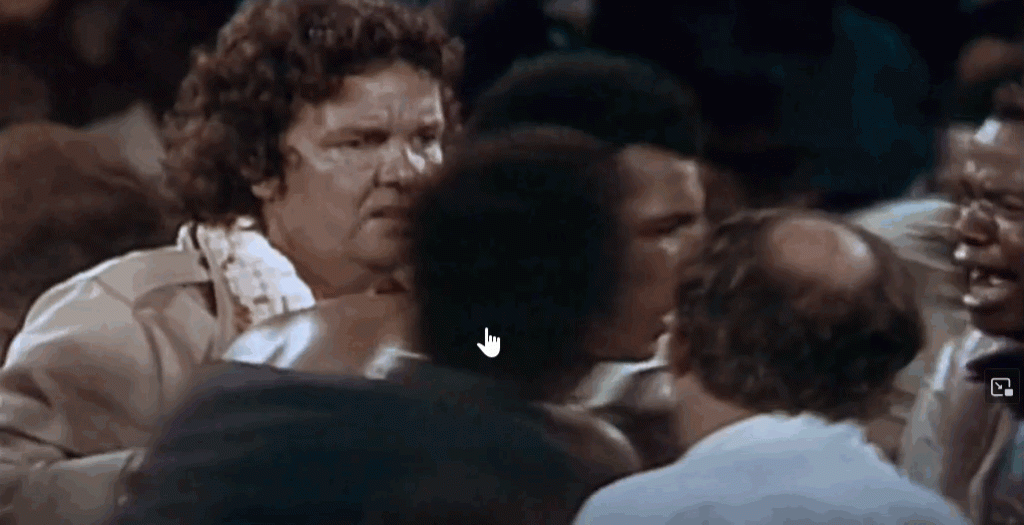
Still from When We Were Kings (1996)
The stadium erupted in disbelief and jubilation as Muhammad Ali, against all odds, knocked down the formidable George Foreman. The press and spectators alike were astounded; it was as if they had witnessed a miracle unfold before their eyes. The air was thick with excitement and shock—Ali had not only survived the relentless onslaught of Foreman’s powerful punches but had masterfully turned the tide to secure a victory that would be remembered as one of the greatest in boxing history. This incredible outcome, where Ali emerged triumphant through strategic brilliance and sheer resilience, left many in tears, overwhelmed by the spectacle of his unexpected triumph. The moment was a testament to Ali’s legacy, not just as a champion in the ring but as a strategist and a warrior who could inspire and astonish the masses.
The psychological impact of his loss to Ali lingered for years, leading Foreman to an early retirement. He later made a historic comeback, reclaiming the heavyweight title at age 45, becoming the oldest boxer to do so.
In entrepreneurship, you will find many examples where under resourced strategists were able to gain an upperhand, here are some examples
Wright Brothers vs Langley
In the early 20th century, the Wright brothers, Orville and Wilbur, embarked on the challenge of achieving powered flight, operating with limited resources funded by their modest bicycle shop in Dayton, Ohio. They faced well-funded competitors like Samuel Langley, who received substantial government backing. Despite their financial constraints, the Wright brothers’ strategic approach involved in-depth research and development, innovative design with the creation of the three-axis control system, and pragmatic testing at the isolated Kitty Hawk, North Carolina.
Their methodical and innovative efforts culminated on December 17, 1903, when they successfully conducted the first powered flight, with Orville piloting the Wright Flyer which stayed airborne for 12 seconds and covered 120 feet. This landmark achievement not only marked a technological breakthrough but also demonstrated that strategic ingenuity could triumph over greater financial resources and established endorsements. The Wright brothers’ success laid the groundwork for the modern aviation industry and stands as a testament to the impact of innovation and strategic foresight in overcoming formidable challenges.
Netflix vs Blockbuster
In the late 1990s, Netflix, founded by Reed Hastings and Marc Randolph, entered the video rental market with a novel approach that challenged the dominant player, Blockbuster. Diverging from Blockbuster’s traditional brick-and-mortar model which relied on late fees, Netflix introduced a subscription model without late fees, enhancing customer satisfaction and retention. This strategic innovation marked the first step in its journey to reshape the media landscape.
Recognizing the burgeoning potential of the internet, Netflix made a pivotal shift to streaming media in 2007, capitalizing on the growth of broadband access. This strategic move transformed how media is consumed and contrasted sharply with Blockbuster’s slow adaptation to digital trends. The result was Blockbuster’s bankruptcy in 2010, while Netflix rapidly expanded, revolutionizing not just media consumption but also content production globally. Intriguingly, during its formative years when it was struggling, Netflix’s founders had approached Blockbuster to sell the company, but the offer was met with laughter by Blockbuster’s CEO—a stark underestimation of Netflix’s potential. This instance highlights the power of strategic foresight and adaptability in overcoming larger, more resource-heavy competitors.
Apple vs IBM
In 1997, Apple was struggling with a market capitalization of only $1.6 billion, facing financial difficulties and a shrinking market share. During the same period, IBM was a dominant player in the tech industry with a market cap of $53.3 billion. The return of Steve Jobs as interim CEO marked the beginning of a transformative era for Apple. He streamlined the product line, forged a critical alliance with Microsoft, and introduced groundbreaking products like the iMac and later the iPod, iPhone, and iPad.
These strategic decisions revitalized Apple’s financial situation and repositioned it as a leader in innovation. By 2024, Apple’s market cap had surged to an impressive $2.617 trillion, demonstrating an extraordinary turnaround. In contrast, IBM’s market cap grew to $154.85 billion by 2024, showing growth but not nearly as explosive as Apple’s. IBM and other tech giants may have underestimated Apple’s potential to come back from near irrelevance. Jobs capitalized on this underestimation, and by using strategic vision he redefined the direction of Apple with innovative products that caught competitors off-guard.
Epilogue: Celebrating the Spirit of the Underdog
Hidden Strategy Collage (Prompt: A dynamic collage illustrating key underdog figures in history, focusing on Jimmy Carter, a generic boxer, a Samurai warrior, an entrepreneur)
Throughout history, numerous underdog stories echo the triumphs of innovation and strategic acumen over larger, well-established competitors, not just in business but also in politics. For instance, Jimmy Carter’s 1976 presidential campaign is a classic political underdog story. Carter, a relatively unknown peanut farmer and former governor from Georgia at the time, used a grassroots strategy to secure the Democratic nomination and ultimately the presidency, overcoming more prominent and better-funded opponents like Gerald Ford.
As technology advances, AI equips smaller companies with a variety of strategies to challenge larger corporations effectively, potentially enabling even a two-person company to achieve a billion-dollar valuation. The rise of AI-driven businesses suggests that we may indeed see more small companies, potentially even as small as two-person teams, challenging large corporations and achieving significant valuations.
As we’ve explored the tactical depths of Shogun and the strategic masterclasses of the Rumble in the Jungle, alongside the disruptive paths carved by Apple and Netflix, a common theme emerges: the indomitable spirit of the underdog. These narratives across battlefields, boxing rings, and business arenas share a profound revelation about the power of hidden strategies masterfully executed by those often underestimated. Each victory is not just a moment of triumph but a testament to the foresight and cunning of a master strategist, turning challenges into opportunities well before the decisive action unfolds.
In the spirit of those who turned their darkest hours into their greatest victories, let this understanding fuel your journey. Embrace the uncertainty, wield your strategic acumen, and continue pushing forward. As an entrepreneur, your voice is the one that declares the final say; let it speak of resilience, innovation, and the unwavering belief in the possible. Many forget that a well-planned, long-term strategy can overcome even the most resource-rich opponents. It is not done until you say it is done.